08 April
Mobile Apps Development / Website Design & Development
Building Scalable Mobile Apps: What Most Companies Get Wrong (and How to Get It Right)
In today’s digital-first landscape, launching a mobile app is easier than ever—but building one that scales successfully is where most companies fall short. Businesses often prioritize speed to market over long-term performance, leading to costly rebuilds, poor user experiences, and missed growth opportunities.
At Orafox, we’ve worked with growing brands to design and develop mobile applications that aren’t just functional—but built to evolve, adapt, and scale alongside their business. Here’s where most companies go wrong—and how to avoid those pitfalls.
1. Poor Architecture Decisions Early On
Most scalability issues originate in the earliest development stages.
Where companies go wrong:
- Choosing monolithic architecture that becomes rigid over time
- Hardcoding features that should be modular
- Ignoring future integrations and expansion needs
- Over-reliance on no-code/low-code tools that limit customization
Deeper Insight:
A poorly structured app creates “technical debt”—small shortcuts that compound into major limitations. As features expand, development slows, bugs increase, and costs rise exponentially.
What to do instead:
- Adopt modular or microservices-based architecture
- Use API-first design for flexibility
- Separate frontend and backend systems for easier scaling
- Build with cloud-native frameworks (AWS, Azure, GCP)
At Orafox, we architect systems that allow businesses to scale features, users, and integrations without starting from scratch. We focus on what you are looking for when we first review the scope of work to the end of the project.
2. Ignoring Backend Scalability
Your backend is the engine of your app—and it needs to handle growth seamlessly.
Where companies go wrong:
- Hosting on limited infrastructure without auto-scaling
- Poor database design leading to bottlenecks
- Inefficient API calls that slow down performance
- Lack of caching strategies
Deeper Insight:
Even small inefficiencies (like unoptimized queries) can become major failures at scale. A spike from 1,000 to 50,000 users can expose weaknesses instantly.
What to do instead:
- Implement auto-scaling cloud environments
- Use load balancing and distributed systems
- Optimize database structures (SQL vs NoSQL where appropriate)
- Introduce caching layers (Redis, CDN usage)
We ensure backend systems built by Orafox are designed to handle both steady growth and sudden demand spikes.
3. Underestimating User Experience (UX)
Scalability isn’t just technical—it’s experiential.
Where companies go wrong:
- Designing for features instead of user journeys
- Ignoring mobile-first behavior patterns
- Failing to optimize for speed and responsiveness
- Overcomplicating navigation and flows
Deeper Insight:
Users expect instant, intuitive interactions. Even a 1–2 second delay in load time can significantly increase drop-off rates.
What to do instead:
- Prioritize performance-driven UX design
- Use data to guide UI/UX decisions
- Continuously A/B test features and flows
- Optimize for different devices, OS versions, and network speeds
Our approach at Orafox combines UX strategy with real-world user behavior insights to maximize retention and engagement.
4. Lack of Integration with Business Systems
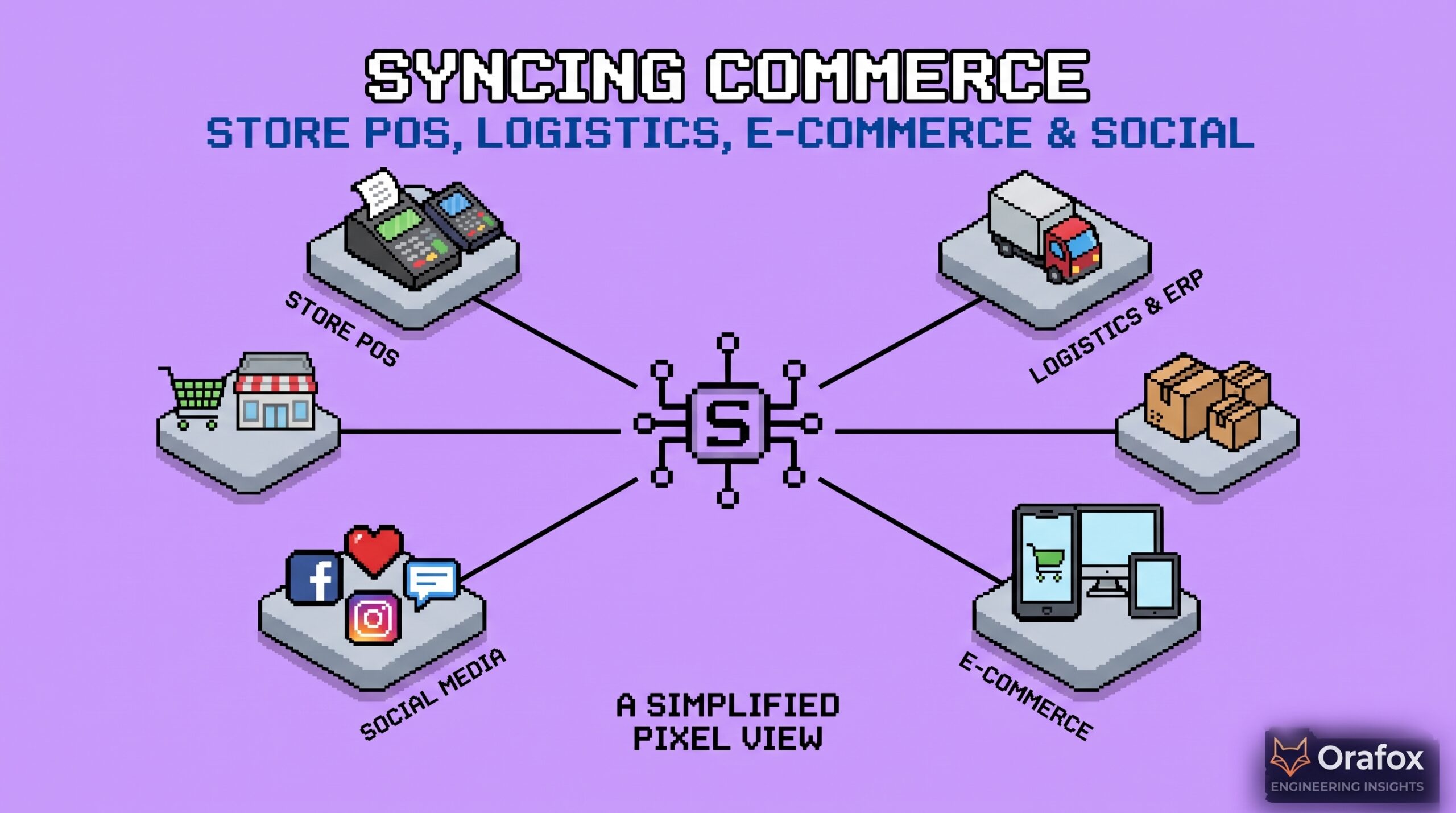
A mobile app should function as part of a broader digital ecosystem—not a silo.
Where companies go wrong:
- Building apps without CRM or ERP integration
- Manual syncing of customer or inventory data
- Disconnected analytics across platforms
- Inconsistent user experiences between web, mobile, and in-store
Deeper Insight:
Disconnected systems create operational inefficiencies and prevent businesses from leveraging real-time data.
What to do instead:
- Build API-driven integrations across all platforms
- Sync data in real-time between systems
- Centralize analytics and reporting
- Create unified customer profiles
In our work with Erewhon, integrating mobile, ecommerce, and in-store systems enabled a seamless omnichannel experience that improved both operations and customer satisfaction.
5. Skipping Performance Testing & Optimization
TTesting is often rushed—or overlooked entirely—in the push to launch.
Where companies go wrong:
- Limited testing environments
- No stress or load testing before release
- Ignoring edge cases and device variability
- Lack of real-time monitoring post-launch
Deeper Insight:
Apps rarely fail under normal conditions—they fail under pressure. Without proper testing, companies are essentially gambling with their launch.
What to do instead:
- Conduct load, stress, and performance testing
- Test across devices, OS versions, and network conditions
- Monitor with real-time analytics tools
- Continuously optimize based on usage patterns
At Orafox, performance testing is embedded throughout the development lifecycle—not just at the end.
6. No Long-Term Development Strategy
Too many businesses treat launch day as the finish line.
Where companies go wrong:
- No product roadmap post-launch
- Ignoring user feedback and analytics
- Delayed updates leading to outdated functionality
- Security vulnerabilities due to lack of maintenance
Deeper Insight:
The most successful apps evolve constantly. Without iteration, even the best apps lose relevance in competitive markets.
What to do instead:
- Develop a continuous improvement roadmap
- Use analytics to guide feature updates
- Release incremental improvements regularly
- Prioritize security updates and compliance
At Orafox, we partner with clients long-term—helping them refine, scale, and innovate as their business grows.
Final Thoughts: Build for Growth, Not Just Launch
Scalable mobile app development isn’t about cutting corners—it’s about making the right decisions early and building with the future in mind.
Businesses that invest in scalability from the start:
- Reduce long-term costs
- Deliver better user experiences
- Adapt faster to market changes
- Unlock new revenue opportunities
How Orafox Can Help
Whether you’re building a new app or looking to scale an existing one, Orafox brings the technical expertise and strategic insight needed to get it right.
From architecture and UX to integrations and ongoing support, we help businesses turn ideas into scalable, high-performing digital products.
Ready to scale your mobile app the right way?
Connect with our team to explore how we can support your next phase of growth.