21 October
Mobile Apps Development / Website Design & Development
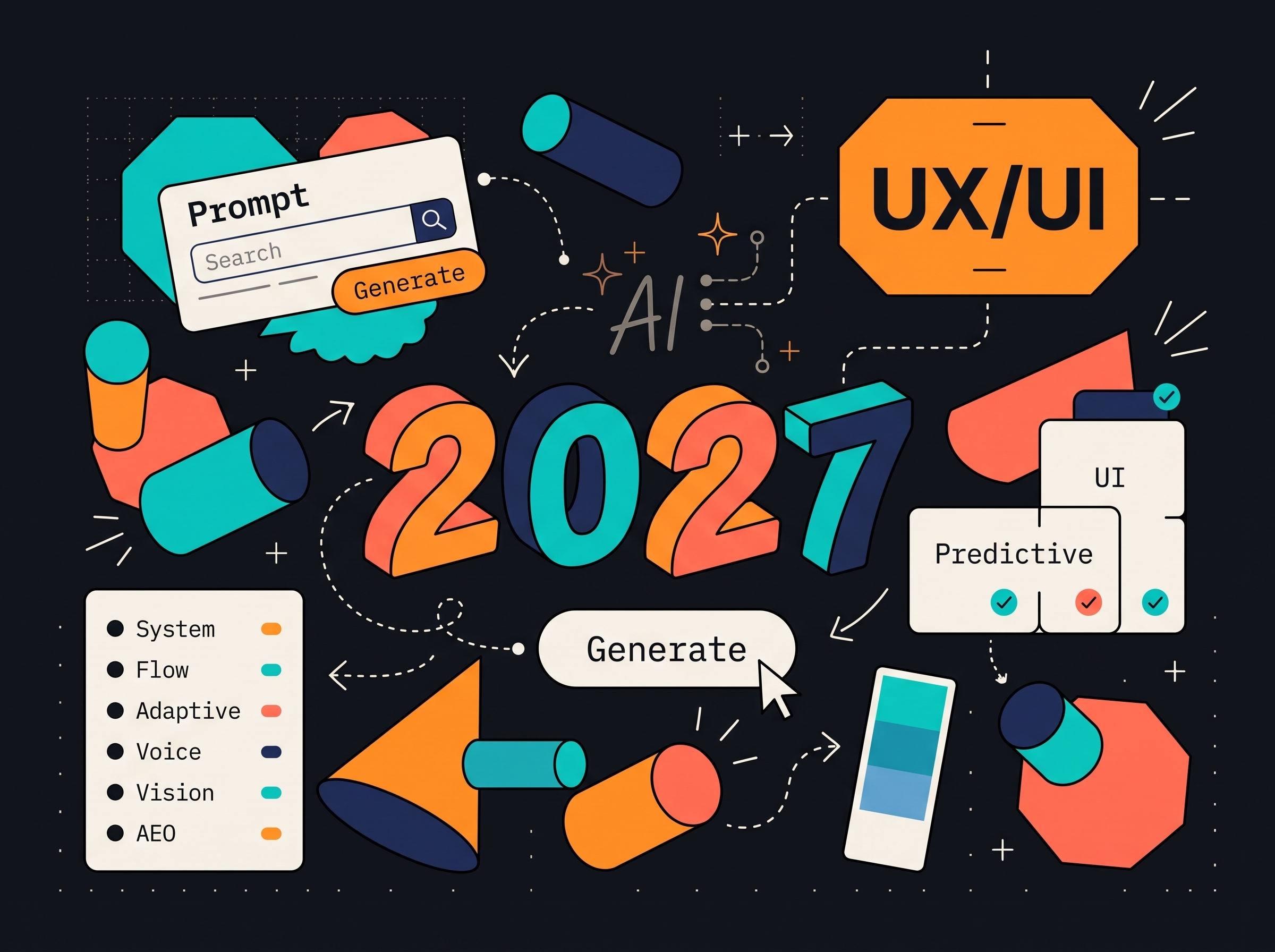
The 2027 Website Redesign Playbook: How AI, AEO, and Adaptive UX Are Changing the Rules
For the past decade, the corporate website redesign followed a predictable three-year ritual. A company would outgrow its branding, hire an agency to refresh the color palette, tighten up the mobile navigation, swap in newer stock photography, and relaunch with a celebratory LinkedIn post.
Heading into 2027, that playbook isn’t just outdated—it’s a liability.
Why? Because your website no longer serves a single audience. Today, your digital storefront is simultaneously evaluated by two very different visitors: human buyers who expect instant, frictionless utility, and AI answer engines (like ChatGPT, Perplexity, and Google AI Overviews) that scan your site architecture to decide whether your brand deserves to be recommended in the first place.
If you are planning a website overhaul for 2027, a purely cosmetic coat of paint will be obsolete the day it goes live. Here is a look at what modern businesses are already getting right, what urgently needs to change, and how AI and next-generation UI/UX are rewriting the rules of web design.
What Businesses Are Getting Right (The Foundations to Keep)
Before tearing down your current site, it helps to recognize where the industry has matured. Over the last few years, smart digital teams have turned several former “nice-to-haves” into rock-solid operational standards:
- Componentized Design Systems: The days of designing 50 disconnected pages in isolation are gone. Leading brands now build unified design systems in Figma—using standardized tokens for typography, spacing, and interactive states—that translate directly into clean production environments like Webflow, Shopify, or custom React frameworks. This keeps brand experiences cohesive and cuts deployment time in half.
- Speed and Mobile Parity as Baselines: Fast load times, Core Web Vitals optimization, and thumb-friendly mobile checkouts are no longer competitive differentiators; they are the cost of entry. Businesses have largely learned that every extra second of load time bleeds revenue.
- Accessibility by Design: Instead of treating accessibility as a last-minute legal compliance scramble, modern UI/UX teams are baking high-contrast ratios, keyboard navigation, and logical screen-reader hierarchies right into the initial wireframing phase.
These fundamentals aren’t going anywhere. In fact, according to the McKinsey Design Index, companies that embed strategic design into their core operations outperform industry peers by two-to-one in revenue growth.
What Needs to Change Immediately (The Silent Conversion Killers)
Even with strong visual foundations, many websites are quietly losing pipeline because their underlying strategy is stuck in 2022. If your upcoming redesign doesn’t address these four friction points, you’re leaving conversions on the table:
1. The “Static Digital Brochure” Mentality
Most websites still serve the exact same hero headline, navigation bar, and call-to-action to a first-time visitor as they do to a returning enterprise buyer. Treating every visitor identically forces users to do the heavy lifting—digging through dropdown menus to figure out if you solve their specific problem.
2. Designing Only for Human Eyes (Ignoring AI Crawlers)
For years, creative directors prioritized atmospheric storytelling and clever, minimalist copy. The catch? AI prioritizes logic over persuasion. When your core value proposition, pricing tiers, or technical capabilities are buried inside complex visual carousels, heavy animations, or vague marketing jargon, AI search engines can’t extract the facts—and they simply skip citing your brand.
3. The “Slapped-On” Legacy Chatbot
Dropping a scripted, rule-based chat bubble into the bottom-right corner of your site does not count as an AI strategy. Users have developed instant fatigue toward rigid pop-up bots that trap them in circular menus only to ask for an email address. If an interactive assistant can’t understand context or complete a real task, it’s hurting your UX.
4. Visual Bloat Over Clarity
Over-engineered scroll-jacking (where the website hijacks how fast or slow you scroll) and massive background videos might win design awards, but they often tank conversion rates. In 2027, clarity beats theatricality every single time.
How AI and Modern UI/UX Will Dictate 2027 Redesign Decisions
So, where is the puck heading? When scoping a website build for 2027, four major shifts in AI and user experience should drive every architectural decision:
1. Dual-Audience Architecture: Where UX Meets AEO
According to research from Amsive, keywords that trigger AI Overviews see a 15.49% drop in traditional click-through rates, while HubSpot’s latest AEO research confirms that brand perception is now shaped before the click.
In 2027, UX designers and technical SEO/AEO architects must work side by side from day one. That means pairing persuasive visual layouts for humans with machine-readable foundations under the hood: clean semantic HTML5, structured JSON-LD schema markup, and clear, question-and-answer content blocks that make it effortless for LLMs to quote your site as the definitive authority.
2. Adaptive, Intent-Driven Interfaces
As eDesign Interactive notes, design systems are evolving from fixed pattern libraries into adaptive ecosystems. Rather than forcing users down a rigid path, 2027 websites will use behavioral signals and lightweight AI to dynamically tailor the experience in real time—surfacing enterprise case studies and security credentials to a corporate visitor, while highlighting quick-start pricing and self-serve onboarding to a small business owner.
3. From Passive Browsing to “Agentic UX”
Sprawling mega-menus are giving way to action-oriented, conversational workflows. Instead of making users read five pages of service descriptions, modern interfaces embed interactive tools directly into the journey:
- Interactive diagnostic calculators and ROI estimators.
- AI-guided product finders that narrow down complex eCommerce catalogs in seconds.
- Autonomous scheduling and intake flows that answer nuanced questions, qualify leads, and book meetings or process requests via voice and text without human friction.
4. Continuous Micro-Evolution (Goodbye to the 3-Year Rebuild)
With modular CMS architectures (like Webflow and headless eCommerce stacks) paired with AI-assisted heatmaps and synthetic user testing, businesses are ditching the painful three-year teardown cycle. A 2027 redesign isn’t about launching a static monument; it’s about building a composable, modular foundation that your team can test, iterate, and expand every single week.
Build for What’s Next with Orafox
A 2027 website is no longer just a digital business card—it is your hardest-working sales rep, your primary data engine, and your brand’s handshake with both human buyers and AI algorithms.
At Orafox, we help ambitious brands bridge the gap between stunning creative execution and heavy-duty technical architecture. Whether you are reimagining a multi-division corporate platform, scaling a high-volume eCommerce web shop, or embedding custom AI into your customer journey, our LA-based and global teams bring every discipline under one roof:
- Strategic UI/UX & Figma Systems: Research-backed wireframing, interactive prototyping, and adaptive design systems built to convert distinct buyer personas.
- Modern Web & Headless Development: High-speed, modular builds across Webflow, Shopify, and custom headless CMS architectures that empower your marketing team to move fast.
- SEO & Answer Engine Optimization (AEO): Semantic code structures, technical schema, and content hierarchies engineered to get your brand cited by AI search engines and ranked by Google.
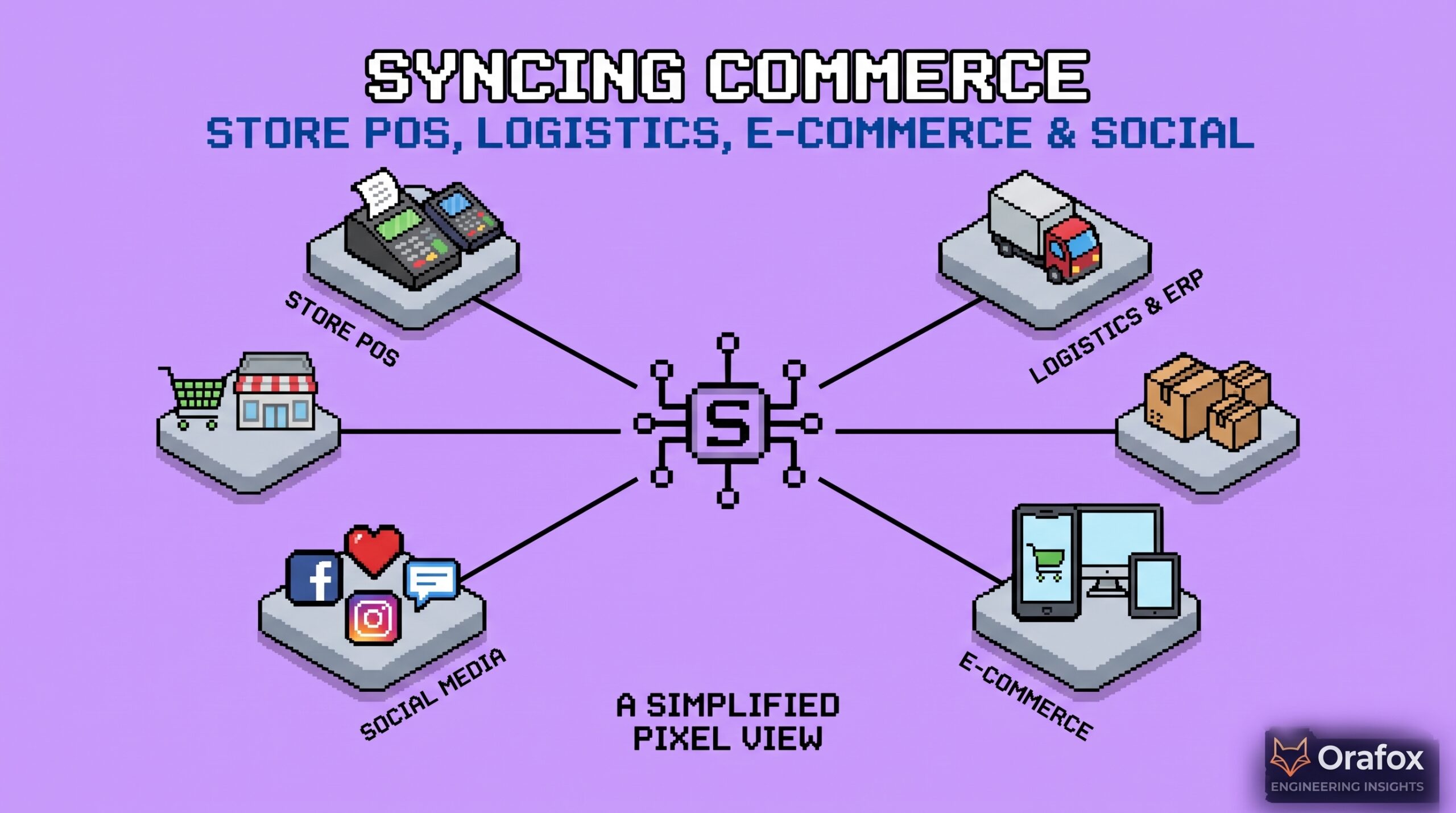
- Custom AI, Mobile & Unified Commerce Integrations: From intelligent, conversational reception and lead-capture workflows to complex ERP/POS integrations, mobile app development, and AR/VR experiences.
Planning a redesign for the year ahead? Don’t just refresh your pixels—upgrade your entire digital engine. Reach out to the Orafox team today to audit your current UX, evaluate your AEO readiness, and build a roadmap for 2027.